

History can be unforgiving. But compared to the present, it is but a mere sting.
On 31 December, 2025, millions of citizens poured onto the streets of Dhaka. From Manik Mia, the sea of people went on for miles – three miles to the south, three miles to the north and around the same to the east and west as well.
By 1pm, the crowd had swelled from Manik Mia all the way to Karwan Bazar, packing the entirety of the roads. Elsewhere, it stretched to Gabtoli and Shewrapara.
Dhanmondi’s main artery, Road-27, teemed with life.
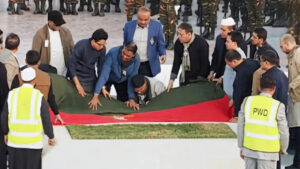
Let there be no doubt: this was the biggest funeral Bangladesh has ever seen.
Khaleda Zia was no ordinary leader. She never sought power. She didn’t harbour ambitions of being a ruler. Her frugal lifestyle at one point in her life is the stuff of legends.
As the plaudits for her pour in, alongside condolences, it may seem a little too late.
After all, Khaleda Zia was held as the sole prisoner at the Old Dhaka Central Jail for about 760 days, beginning in February 2018.
For 760 days, she remained isolated in the abandoned colonial-era section.
In other terms, about 2.5% of Khaleda Zia’s life was spent in essentially solitary confinement conditions during her imprisonment.
When she was finally released, during the Covid-19 outbreak in 2020, she was again placed essentially under house arrest.
During that time, however, this was barely talked about, and when it was, the tones were hushed.
Of course, there are various reasons behind the muted dissent. History, after all, is always written by winners, or at least those who are winning at the time.
This is nothing new.
What was new, on the other hand, was how a government treated a politician in this country.
If justice was the intention, this was not met. It was only a vindictiveness unseen – vile and untamed.
Khaleda Zia, to her credit, took it all in stride.
Soon after her full release following Sheikh Hasina’s ouster, on 21 November 2024, when she attended the Armed Forces Day reception at Senakunja in Dhaka — her first public outing in about six years since her imprisonment in 2018 – it marked her return to political life.
Given the strew of ailments plaguing her health, coupled with the psychologically draining confinement, how Khaleda managed to make an appearance is probably a testament to the iron will she has been credited with.
She was wheel-chaired in, but took moments to greet people with a full smile. The fragility was etched across her face, but she refused to let that hold her back.
She even travelled to London for an emergency medical check-up to see her family soon after, in January. The reunion was decades in the making.
Then she returned. It was almost as if she was tying up loose ends.
On 24 November, Khaleda Zia was placed in the ICU at Evercare Hospital after her health deteriorated due to complications, including a severe infection affecting her heart and lungs.
As news of her death broke in the early hours of yesterday, a pall of gloom descended on the city.
Tributes poured in, and foreign dignitaries rushed to attend the funeral.
Within 24 hours all that remained almost unsaid in the past decade and a half rushed to the forefront.
Memories and grief were shared. Anger was vented. Closure was sought.
And in turn, millions turned up to bid adieu to one of the finest leaders the country has ever seen.
With Khaleda’s demise, a vital chapter in Bangladesh’s history comes to an end. As her son, Tarique Rahman, takes up the mantle, it kickstarts the next phase of a new Bangladesh.
A new dawn is upon us. And if anyone revisits history, there will be no confusion as to Khaleda’s role in ushering this new dawn.
The largest funeral the country has ever seen was befitting for the one who never wanted the pedestal to begin with.
- Copyright: Dhaka Stream


+ There are no comments
Add yours