
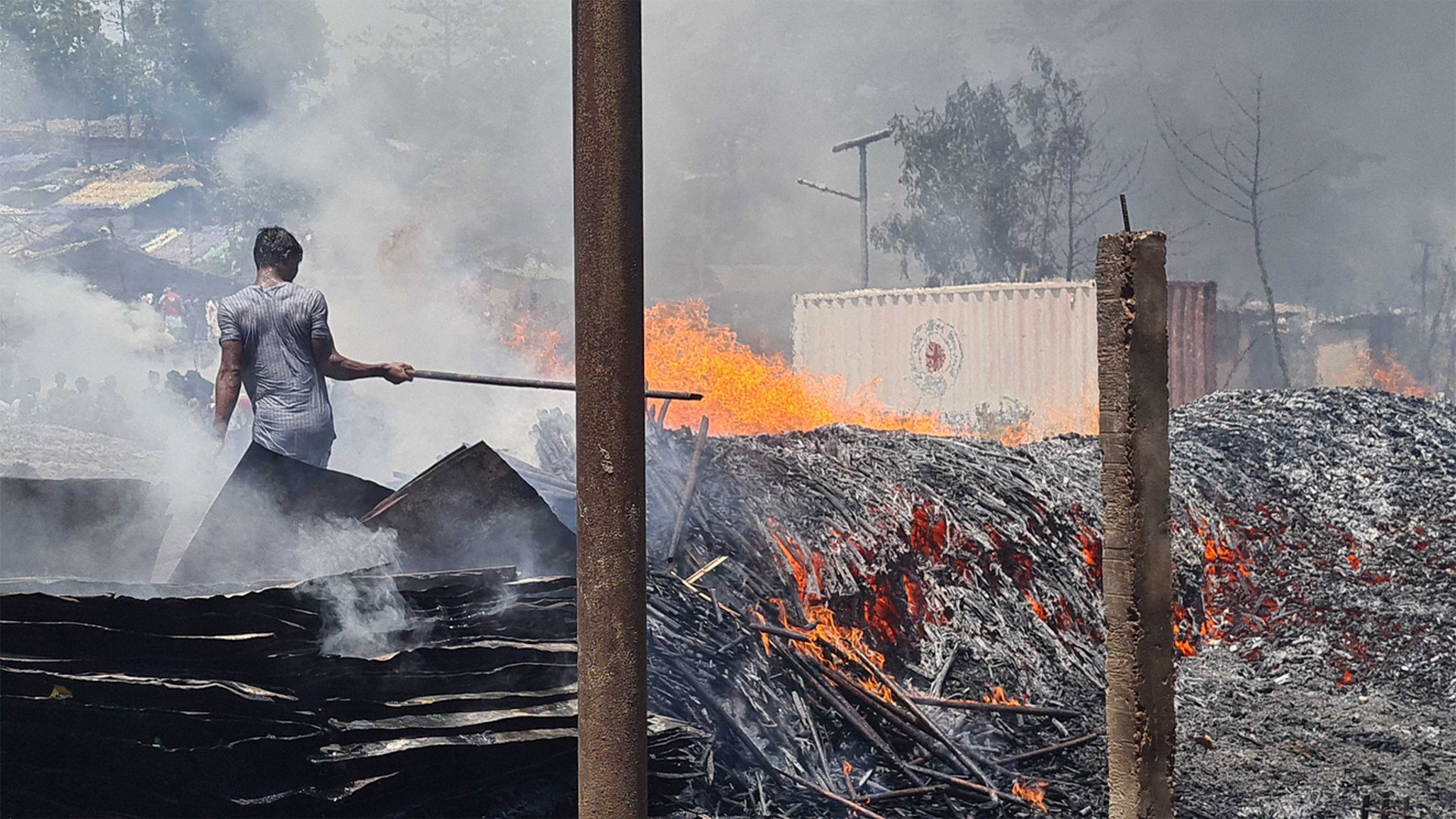
A devastating fire ripped through Block D of Rohingya Camp-16 in Ukhiya, Cox’s Bazar, early Tuesday, gutting more than 450 shanties and rendering hundreds of refugee families homeless. The blaze broke out in the early hours and spread fast through the densely packed shelters made of bamboo, plastic sheets and other highly flammable materials.
Fire service officials said eight units from Ukhiya Fire Service responded to the incident. With support from law enforcement agencies and Rohingya volunteers, firefighters managed to bring the blaze under control after three to three-and-a-half hours of continuous operation. By then, between 400 and 450 shelters had been reduced to ashes.
Ukhiya Fire Service station officer Dolar Tripura said no casualties were reported. He added that the cause of the fire could not be determined immediately and an investigation was underway. Camp residents said the fire spread within minutes, leaving families no time to save belongings, documents or food supplies.
Local authorities and humanitarian agencies began assessing the damage on Tuesday morning to determine immediate relief needs, including emergency shelter, food and medical support for affected families.
The incident adds to a long list of repeated fires in the Rohingya camps, particularly during the dry winter season. Overcrowding, narrow access roads, illegal gas and electricity connections, and the use of combustible construction materials make the camps extremely vulnerable to fire.
In March 2021, one of the deadliest fires in the camp settlements killed at least 11 refugees, injured dozens and destroyed over 10,000 shelters, displacing around 50,000 people. In January 2024, another major fire in Ukhiya burned for hours and destroyed hundreds of shelters. Camp officials say dozens of fires—both small and large—occur every year, with winter months consistently recording the highest number of incidents.
Despite repeated warnings and safety measures, fire hazards remain a constant threat, keeping nearly one million Rohingya refugees in Cox’s Bazar trapped in a cycle of loss and displacement.










+ There are no comments
Add yours