
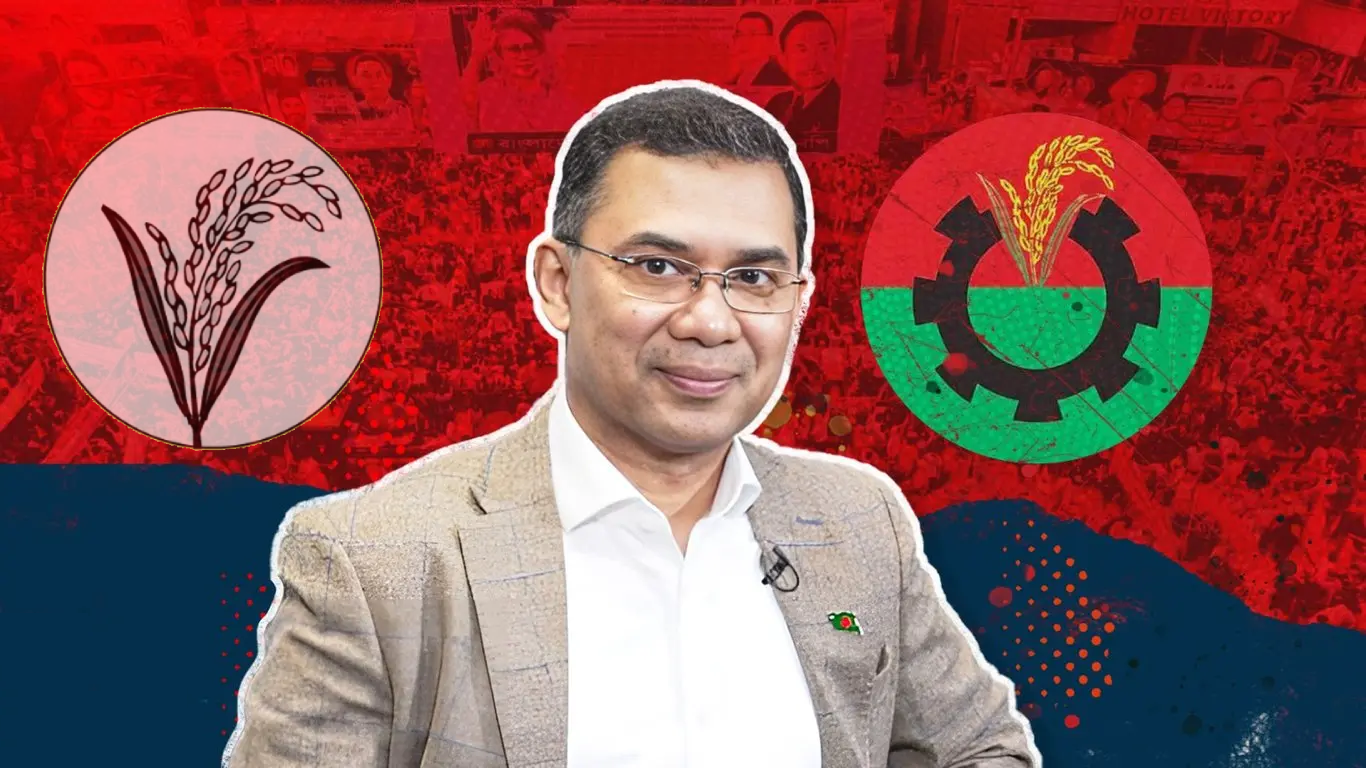
Dhaka:: The Bangladesh Nationalist Party (BNP), under the leadership of Chairperson Tarique Rahman, has emerged victorious in the 13th National Parliamentary Elections, securing a majority of seats and positioning itself to form the next government.
Unofficial tallies show BNP winning 182 seats, representing 61% of the 300-member Jatiya Sangsad. This gives the party a clear majority, enabling it to govern without coalition dependency. Bangladesh Jamaat-e-Islami followed with 56 seats (19%), while the National Citizen Party (NCP) gained 4 seats (1%). Other smaller parties and independents collectively secured 11 seats (8%).
Tarique Rahman himself achieved decisive victories in both Dhaka-17 and Bogura-6, consolidating his leadership role and strengthening BNP’s mandate.
Voting and Referendum
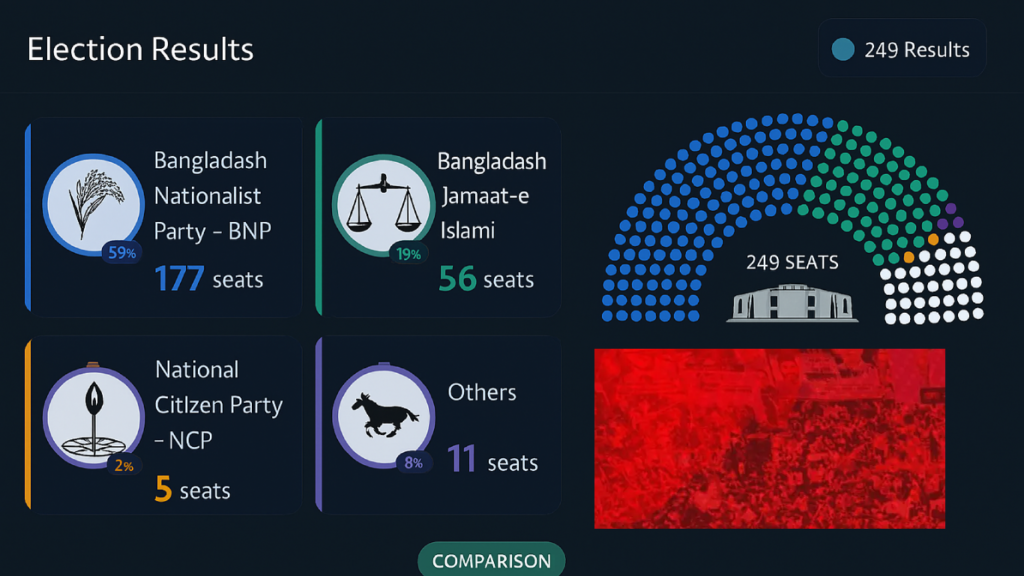
Voting took place across 42,779 polling centers nationwide, beginning at 7:30 a.m. and continuing uninterrupted until 4:30 p.m. Alongside the parliamentary elections, a nationwide referendum was held on the National Charter 2025. Preliminary results indicate overwhelming support, with 77.7% voting “Yes”, signaling strong public backing for reforms introduced by the interim government.
Historical Context
This election is the first since the 2024 July Revolution, a student-led uprising that ended Sheikh Hasina’s 15-year tenure. The interim government, headed by Nobel laureate Muhammad Yunus, oversaw the transition and introduced the referendum to reshape governance.
BNP supporters celebrated across Dhaka and Bogura, with large gatherings marking Tarique Rahman’s victories. Party leaders hailed the election as peaceful and credible, while former Prime Minister Sheikh Hasina denounced the process as “illegal and unconstitutional.” Jamaat-e-Islami, though securing a significant bloc, remains far behind BNP and faces challenges in expanding its influence.
With BNP holding a majority, Tarique Rahman is set to lead Bangladesh into a new political era. The party’s dominance, combined with the referendum’s approval, signals a shift toward reforms and a redefined governance structure. Analysts suggest BNP’s majority will allow it to pursue its agenda with confidence, though coalition politics and opposition voices may still shape parliamentary debates.








+ There are no comments
Add yours